
VIDEO LIBRARY
GET TO KNOW OUR
TECHNOLOGY

We are Sabik Offshore
Sabik Offshore has dedicated itself to designing products and systems specifically for use in offshore wind farms. We’ve taken extra care to develop components that are easy to handle, to install and to commission.

Our Story
20 years ago… an idea was born. An idea to harness new technology, to combine remote monitoring possibilities with lights. Then – came offshore wind. With each project we gained experience and know-how. So much so, that we eventually developed our own products specifically designed for offshore wind.

Welcome at Sabik Offshore
Sabik Offshore offers exciting opportunities in a dynamic and growing industry. We are always looking for unique and dedicated people to join our team. You haven’t found a suitable position, but would like to join our team? Reach out and tell us your story. Wolfgang Schaper is looking forward to your e-mail or phone call.
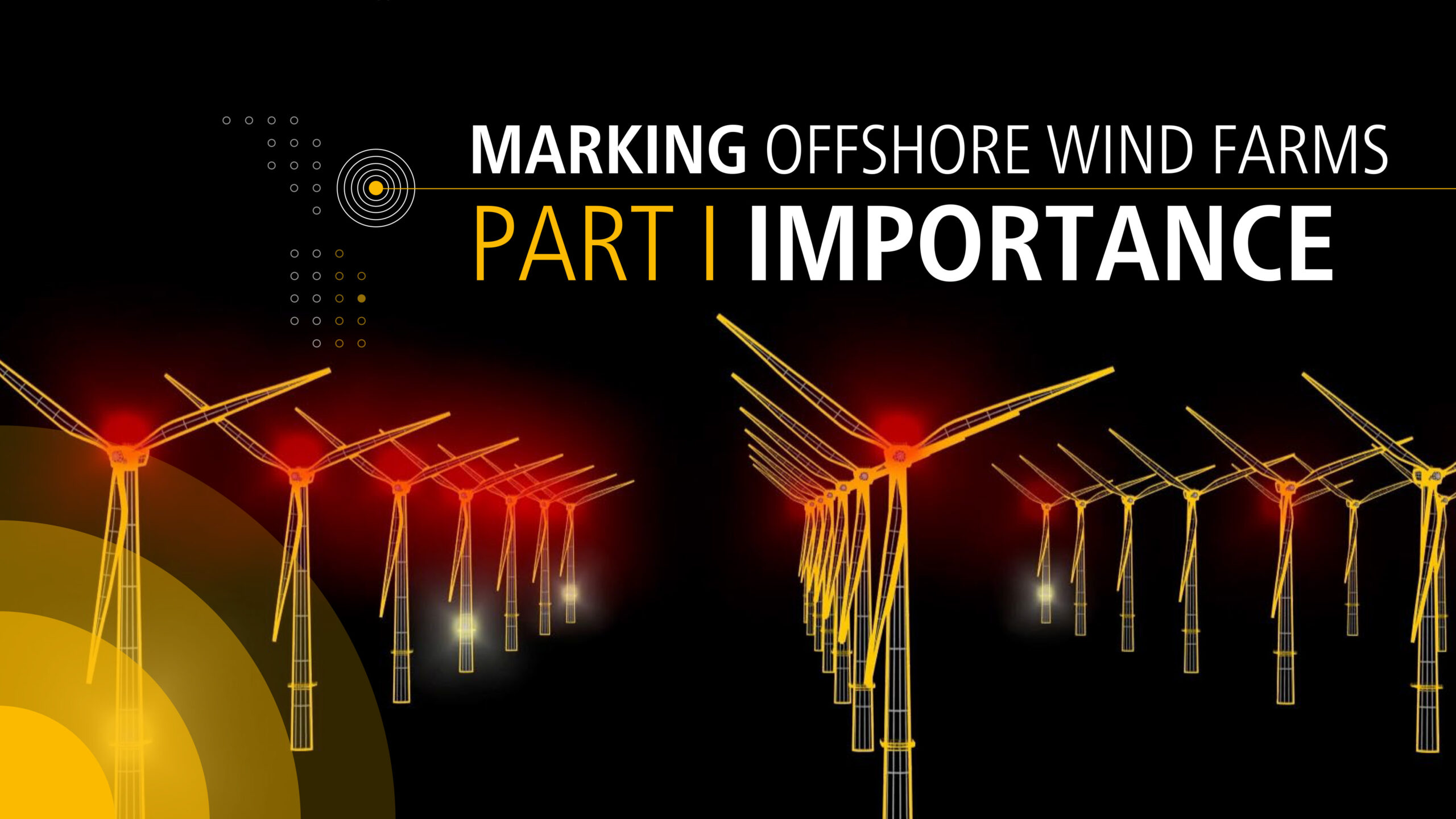
PART I
Why Marking Offshore
Wind Farms is important?
Marking Offshore Wind Farms provides a crucial function during development and operation to ensure the safety of mariners, pilots and service personal as well as the assets themselves. Sabik Offshore is a leader in marking offshore wind farms worldwide.
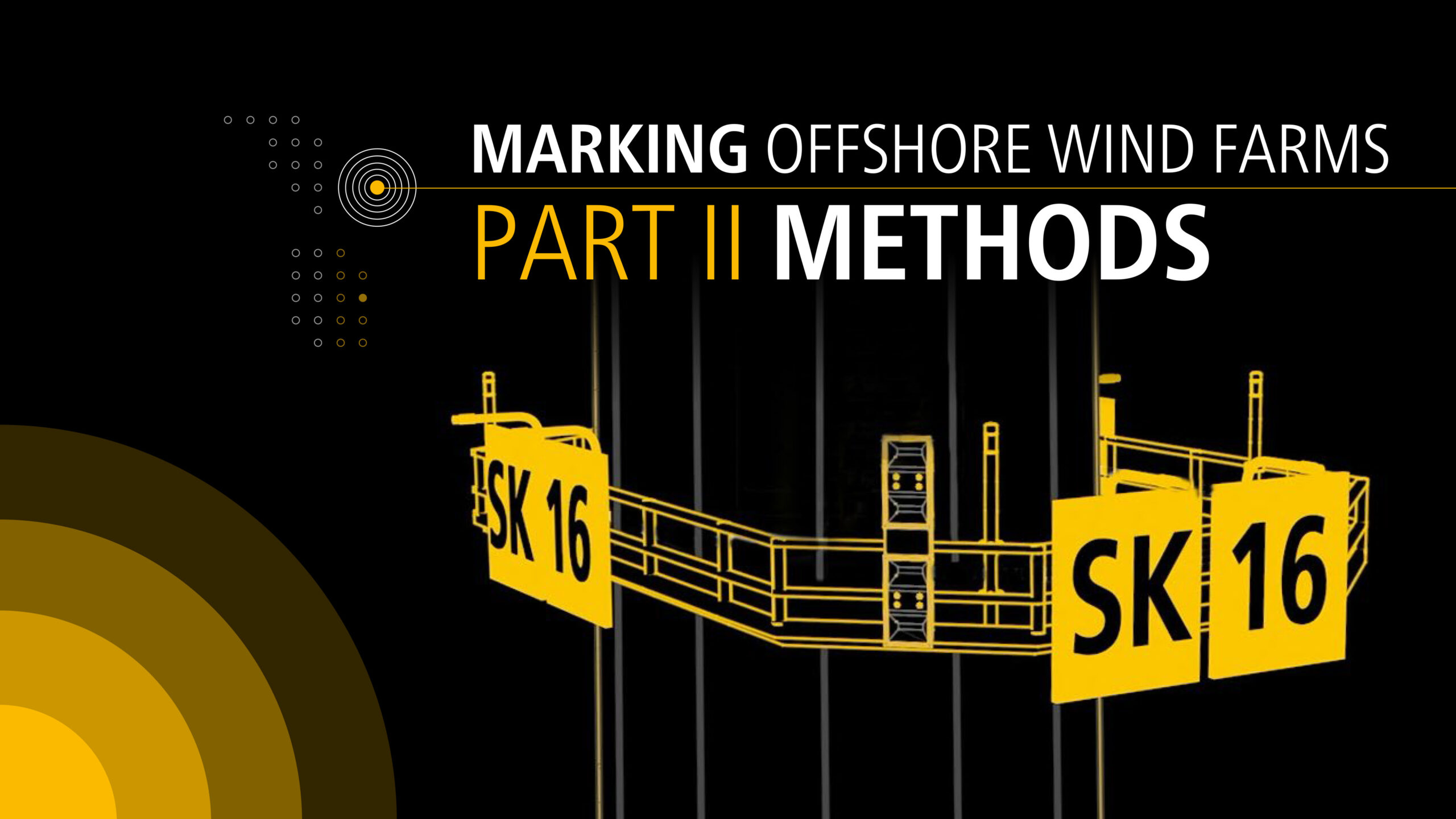
PART II
How to mark an
Offshore Wind Farm?
There are many techniques to marking an offshore wind farm such as cardinal buoys, temporary lighting, aids to navigation, AIS, ID marking, fog signals and aviation obstruction lighting. Here we give you a short overview of the purpose of each technique.
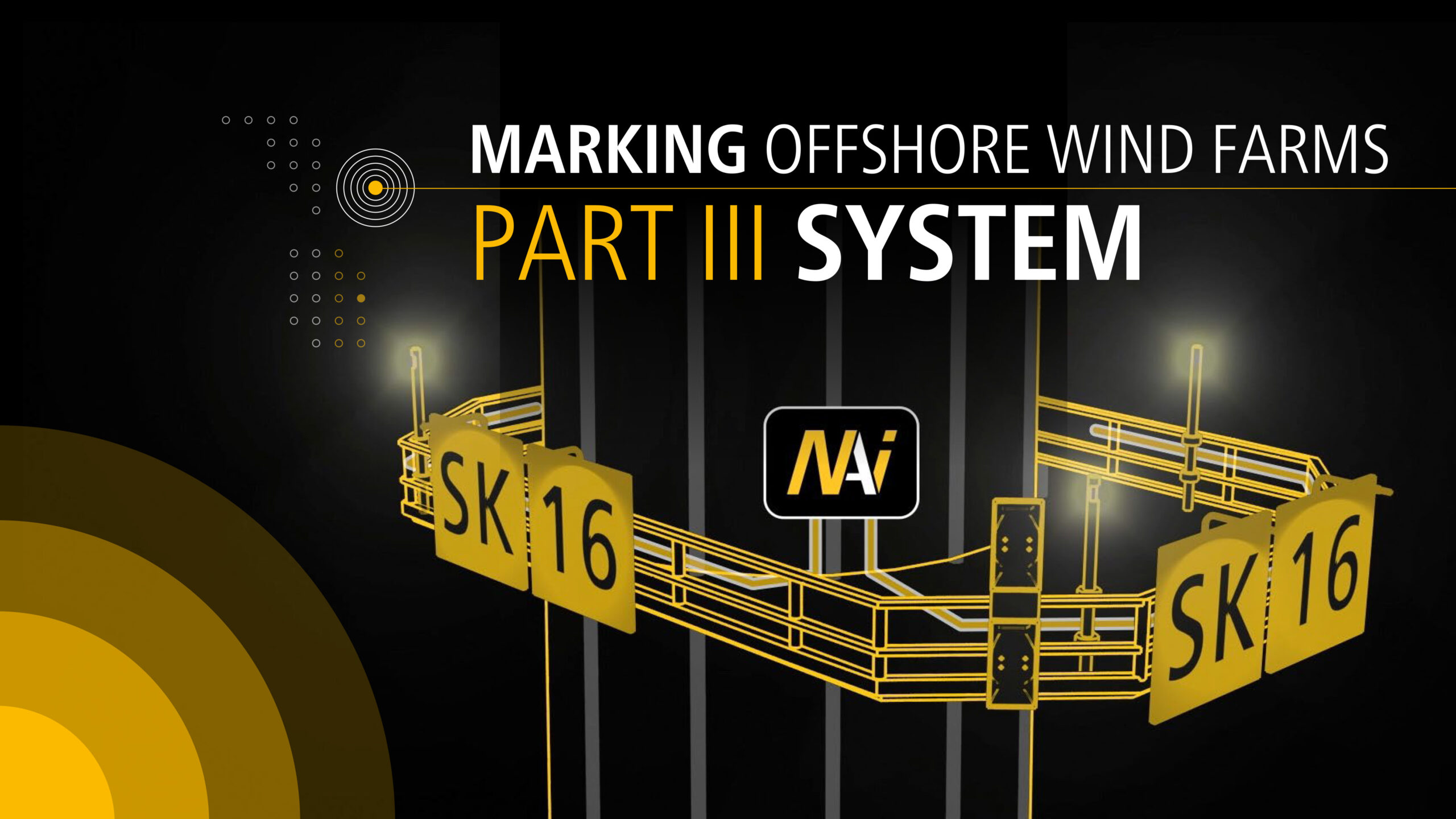
PART III
How does the marking
system work?
After installing your aids to navigation, AIS, ID marking, fog signals and aviation obstruction lighting, you need to tie it together in a system. The NAi system brings all marking methods together into a cohesive system that is monitored and controlled. This concludes our three part series on marking offshore wind farms.
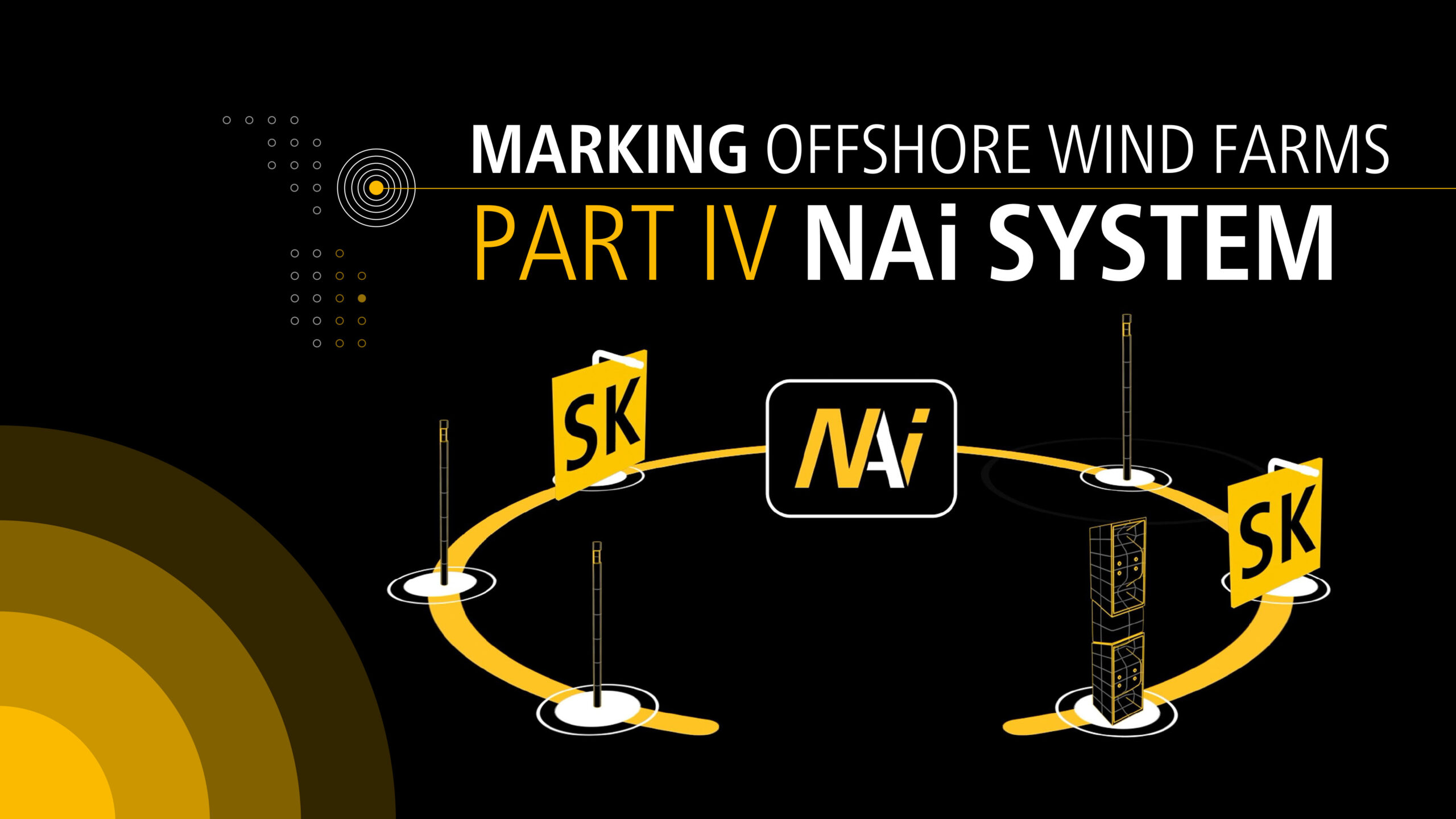
PART IV
Why do we need to reinvent
the wheel for every project?
How can we simplify installation? And how can we simplify the commissioning process? We set out to answer these questions and the end result was the NAi system and product range. The NAi bus system was created to easily string together multiple components on an offshore wind turbine, making the system design, installation and commissioning simpler.
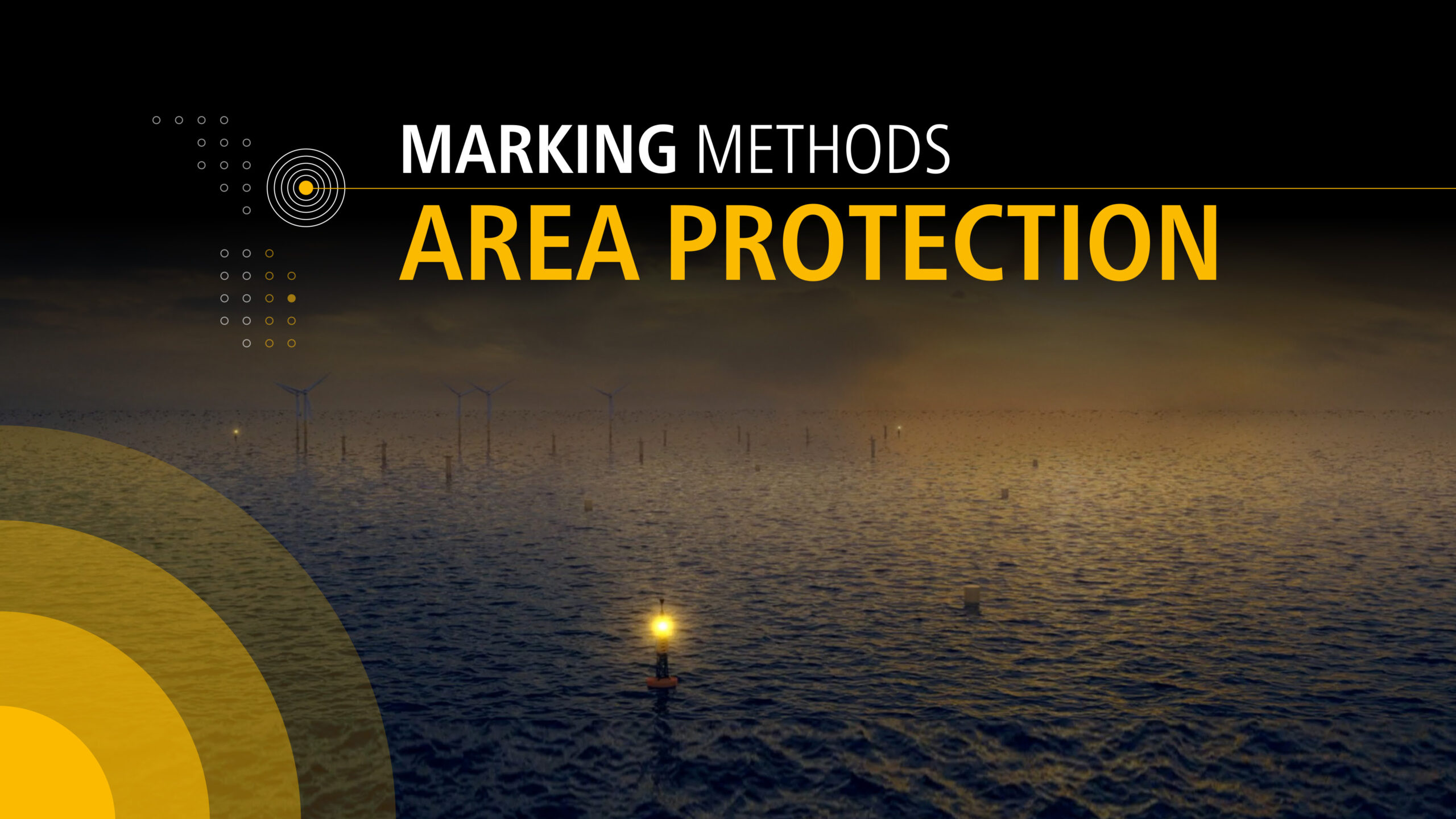
Area Protection
In our day to day life, we recognize universal symbols of a construction site: cones, red striped tape and concrete barriers or large temporary walls. But what about an offshore wind farm? How do we communicate that this vast span of water is a construction site?
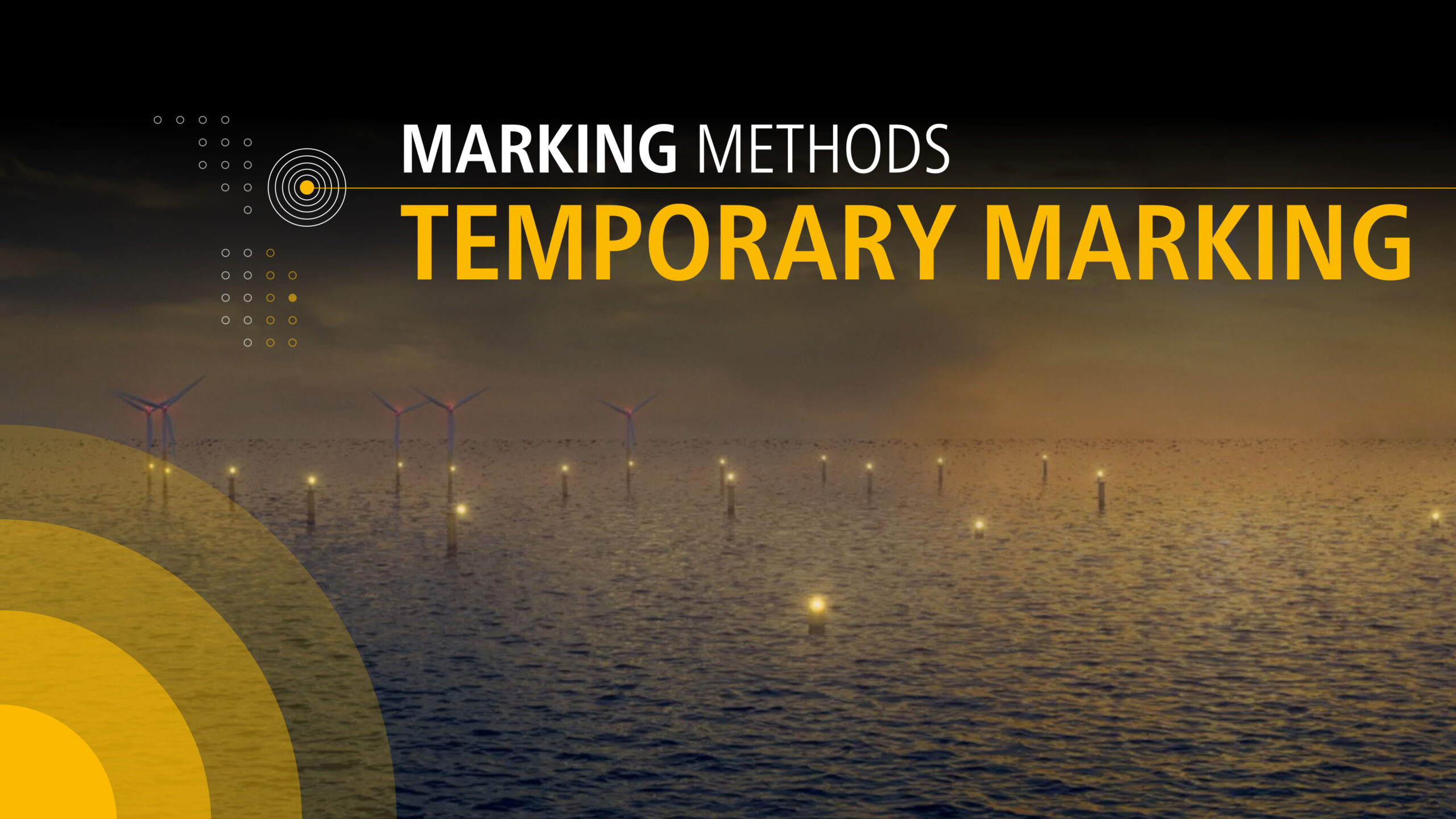
Temporary Marking
How do we keep these obstructions visible and the area safe during construction? The foundation is in the water. Maybe even the Transition piece is also installed. But there’s no power to the marking system.
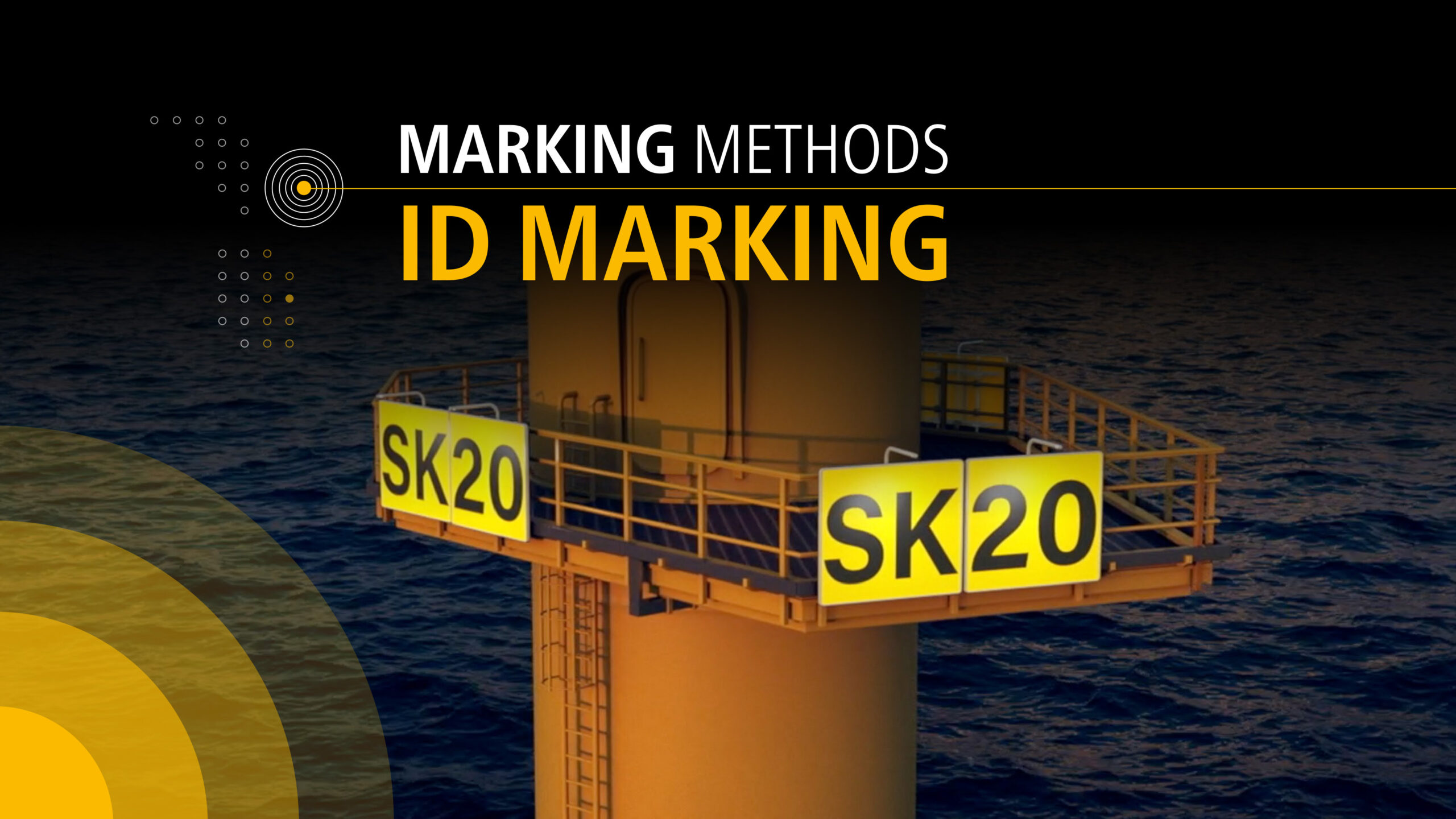
ID Marking
Does an offshore turbine have an address? Each turbine has specific coordinates. These would get too big and complex to communicate.
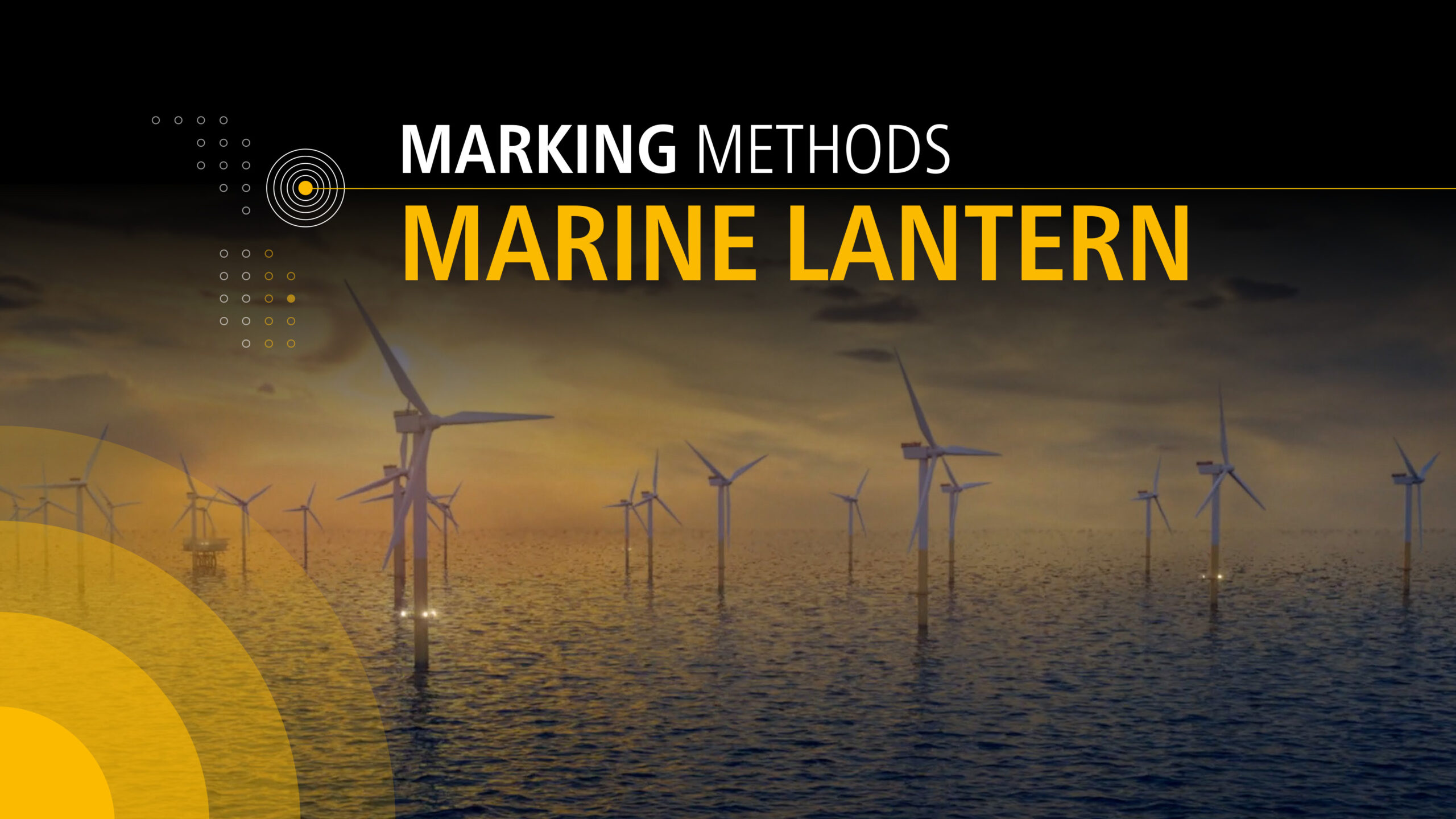
Marine Lantern
The fundamental marking element of an offshore windfarm is the marine lanterns. Typically 2 & 5 nautical mile lanterns mark the perimeter of an offshore windfarm.The lanterns are all synchronized to provide a uniform signal that there is a “large” obstruction in the water.
Audible Marking
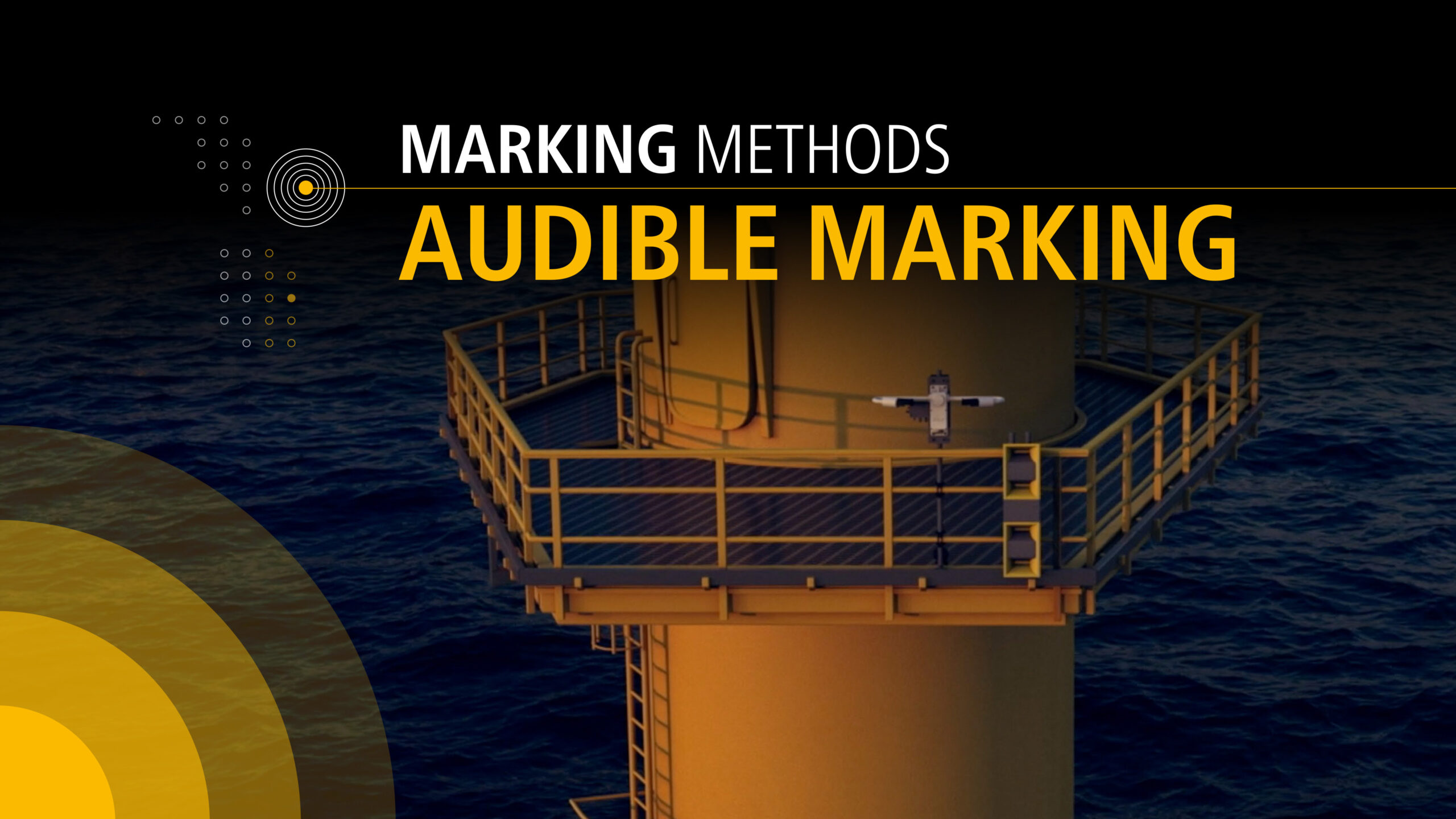
During times of low visibility, a fog signal warns a mariner that they are close to danger. An offshore wind farm poses a unique challenge since it is an artifical “island” spanning many kilomters or miles. Modern simulation software helps us determin the best position for every fog singal on an offshore wind farm so that we get 100% coverage all the way around the wind farm.

Digital Marking – AIS
Modern commercial vessels use digital maps. In order for a vessel or wind farm to show up on these maps, you need to transmit an AIS (Automatic Identification Signal). The object name, type of obstruction as well as the longitude and latitude of the structure then appear on a mariner’s digital map.
Aviation Lighting
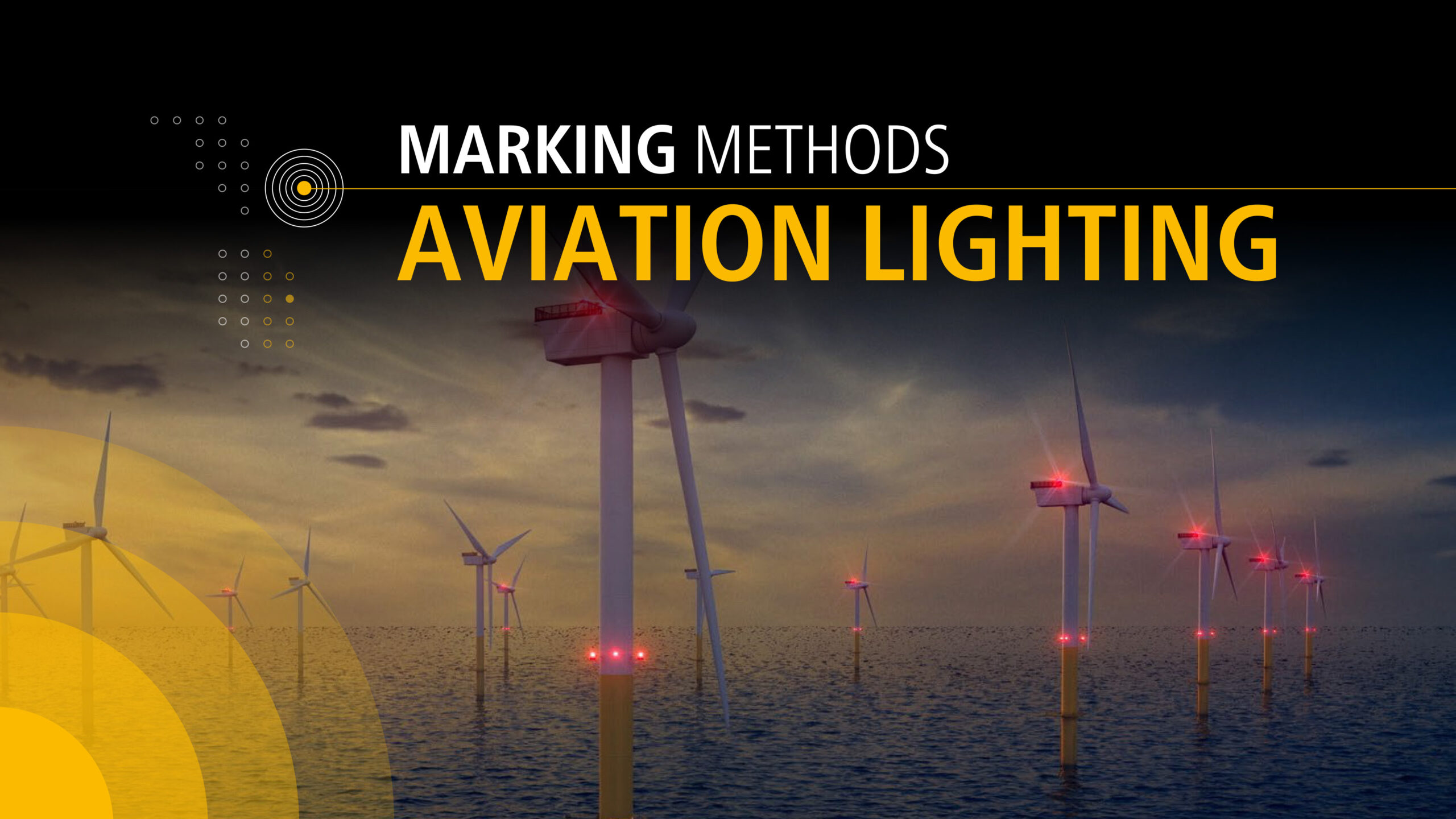
Whether it’s a helicopter approaching the wind farm or low flying airplanes passing by, there is an inherent risk with turbines and their blades rising out of the water. Aviation lights help pilots navigate around or through an offshore windfarm.
Medium Intensity Aviation Obstruction Lights
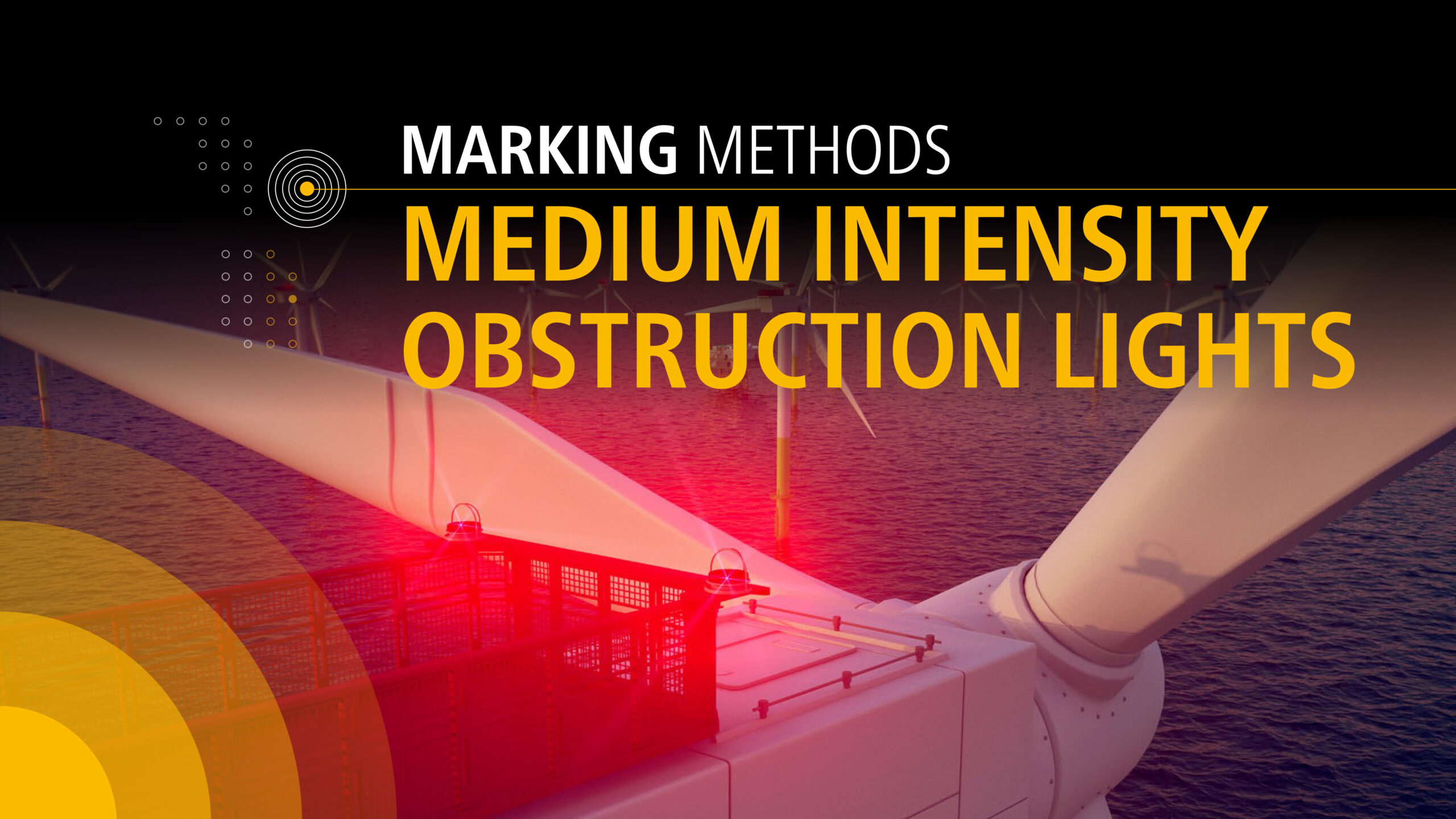
A medium intensity obstruction light for an offshore wind turbine is typically a red flashing light, mounted on the nacelle, signaling to a pilot that there is an obstruction in their way. To make sure that the lights are always seen, 360 degrees around the turbine, two are mounted on top of the nacelle.
Low Intensity Tower Lights
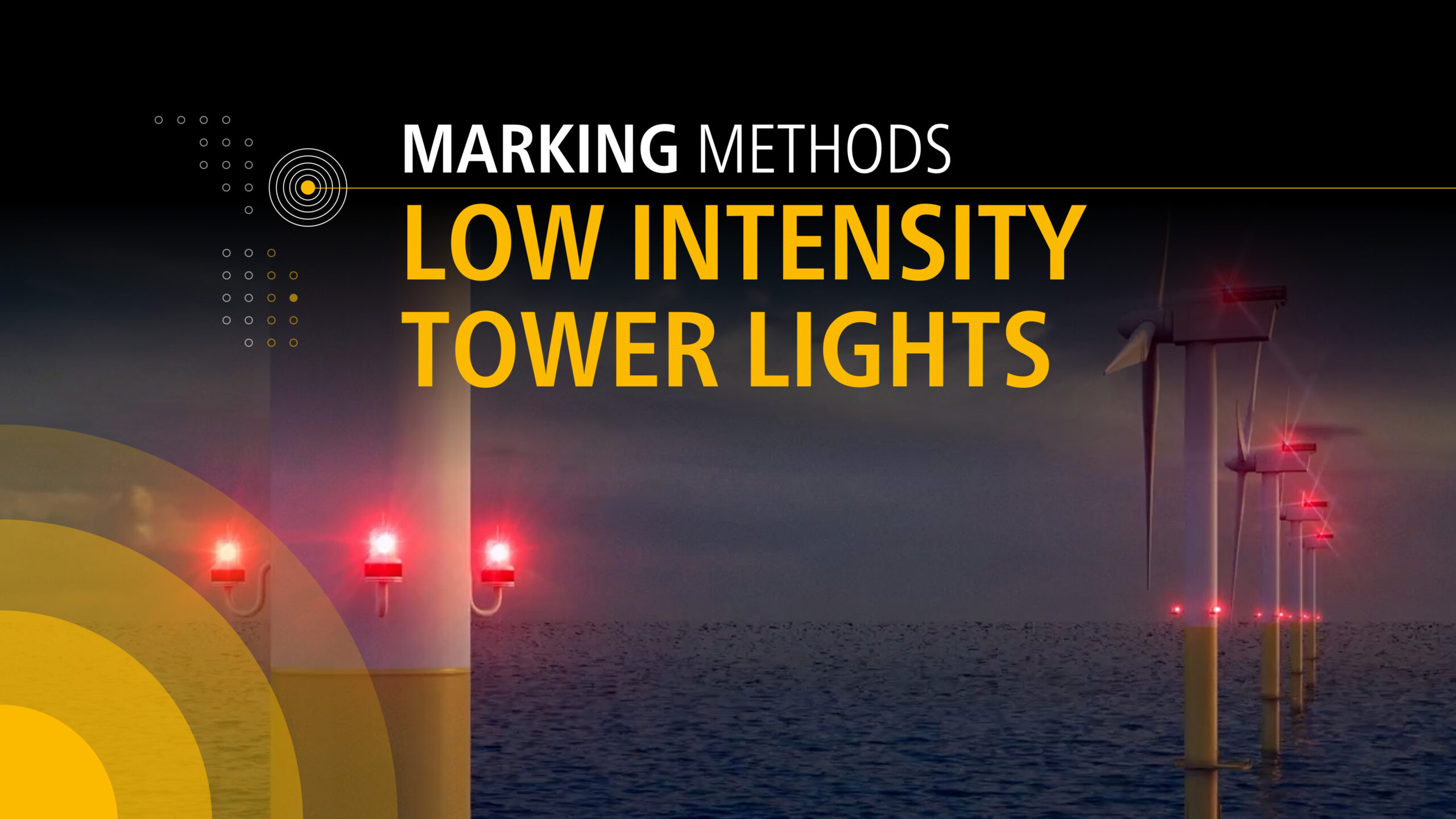
As wind turbines continue to get taller, an additional layer of lights can help a pilot understand the size of the obstruction in their path. We call these low intensity tower lights and they are installed on the turbine tower.
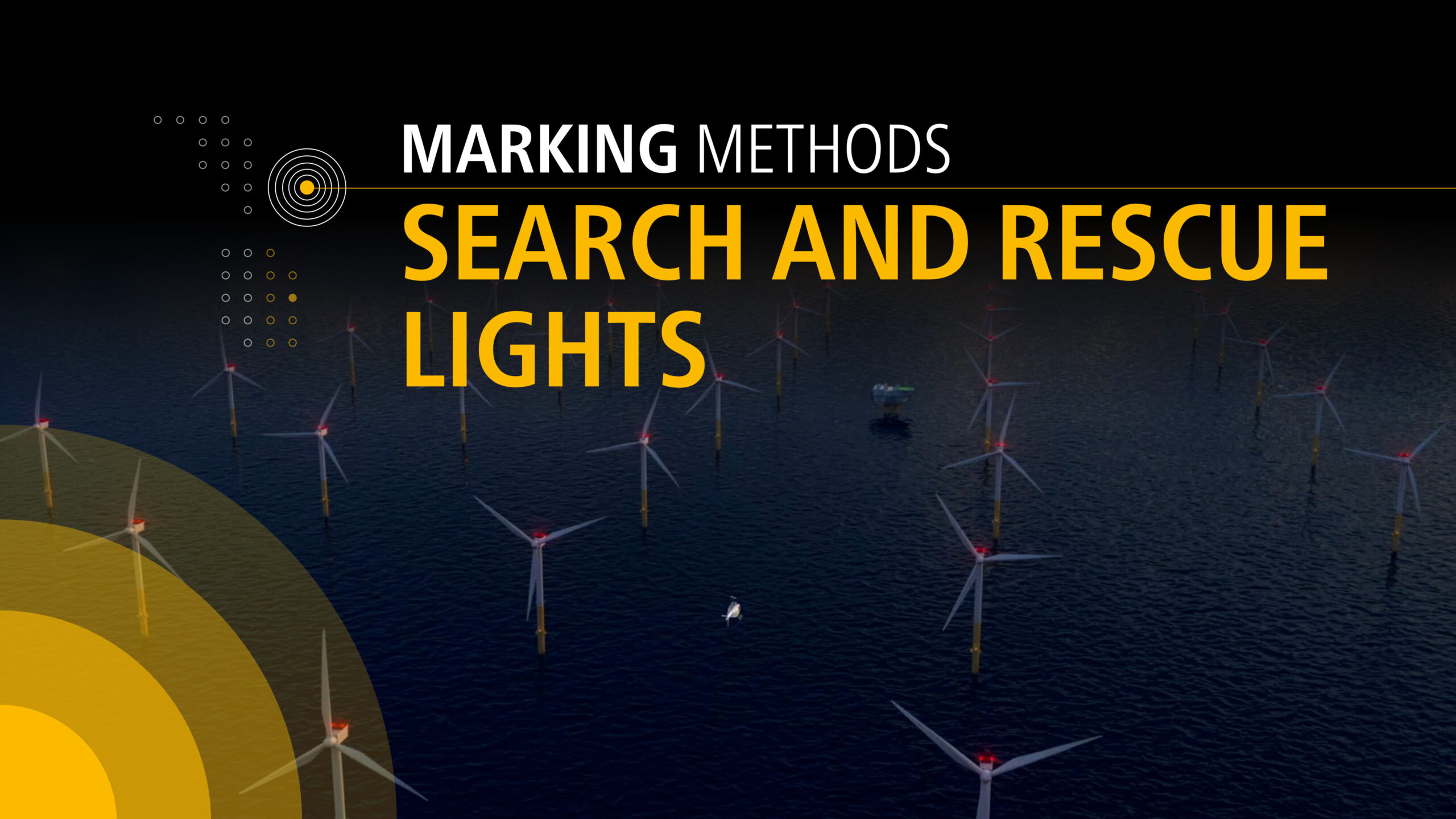
Search and Rescue Lights
The search and rescue light, called a SAR light, is part of an overall search and rescue plan. During search and rescue operations within an offshore windfarm, the medium intensity lights can be turned off and the search and rescue lights on. These lights are located on the nacelle and have a lower intensity than the medium intensity obstruction lights.
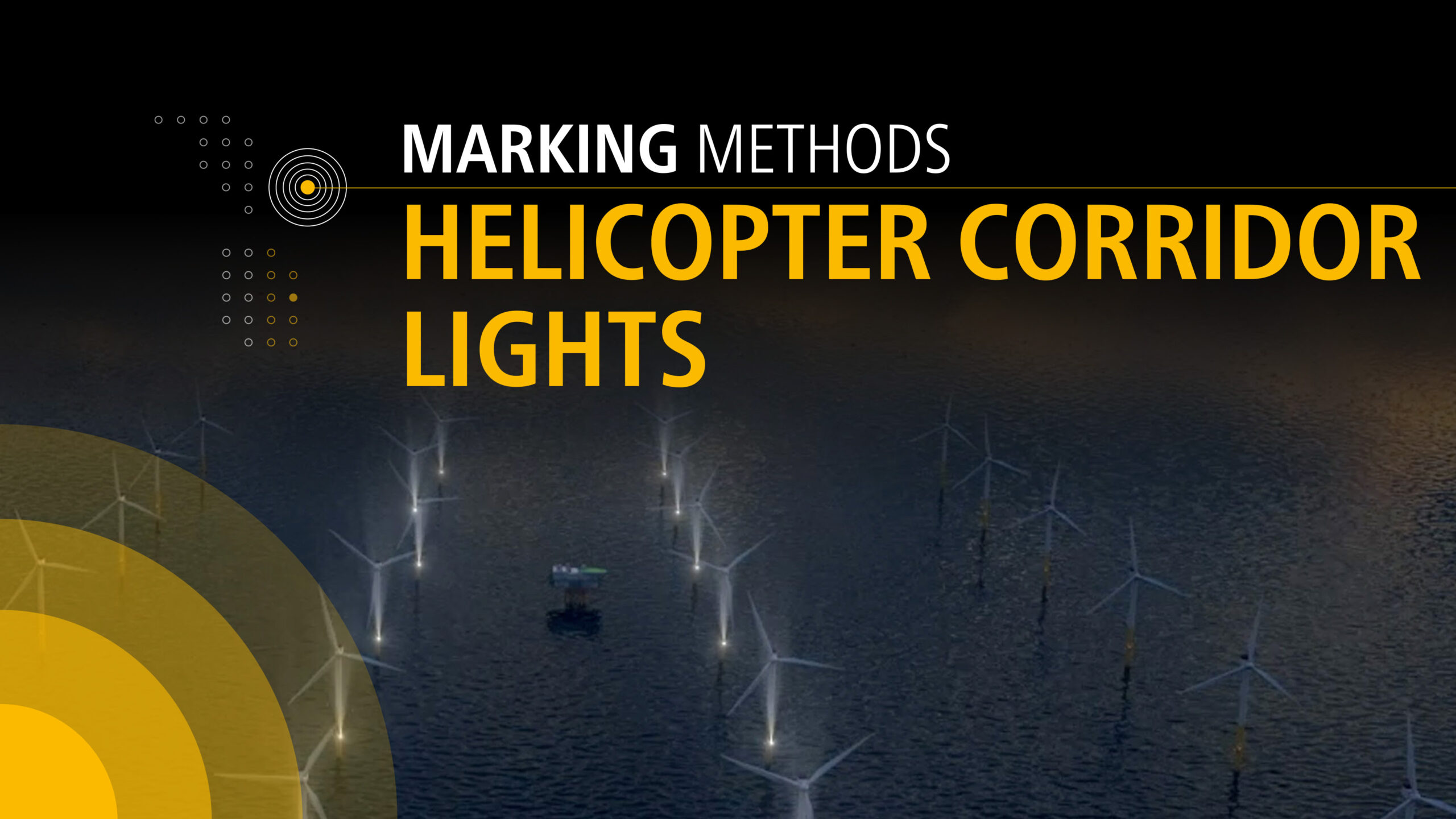
Helicopter Corridor Lights
A helicopter corridor is created by using high powered floodlights to illuminate two thirds of the turbine tower. These lights are installed on specific turbines to create and illuminate a path towards the helicopter landing pad which is typically located on the OSS.
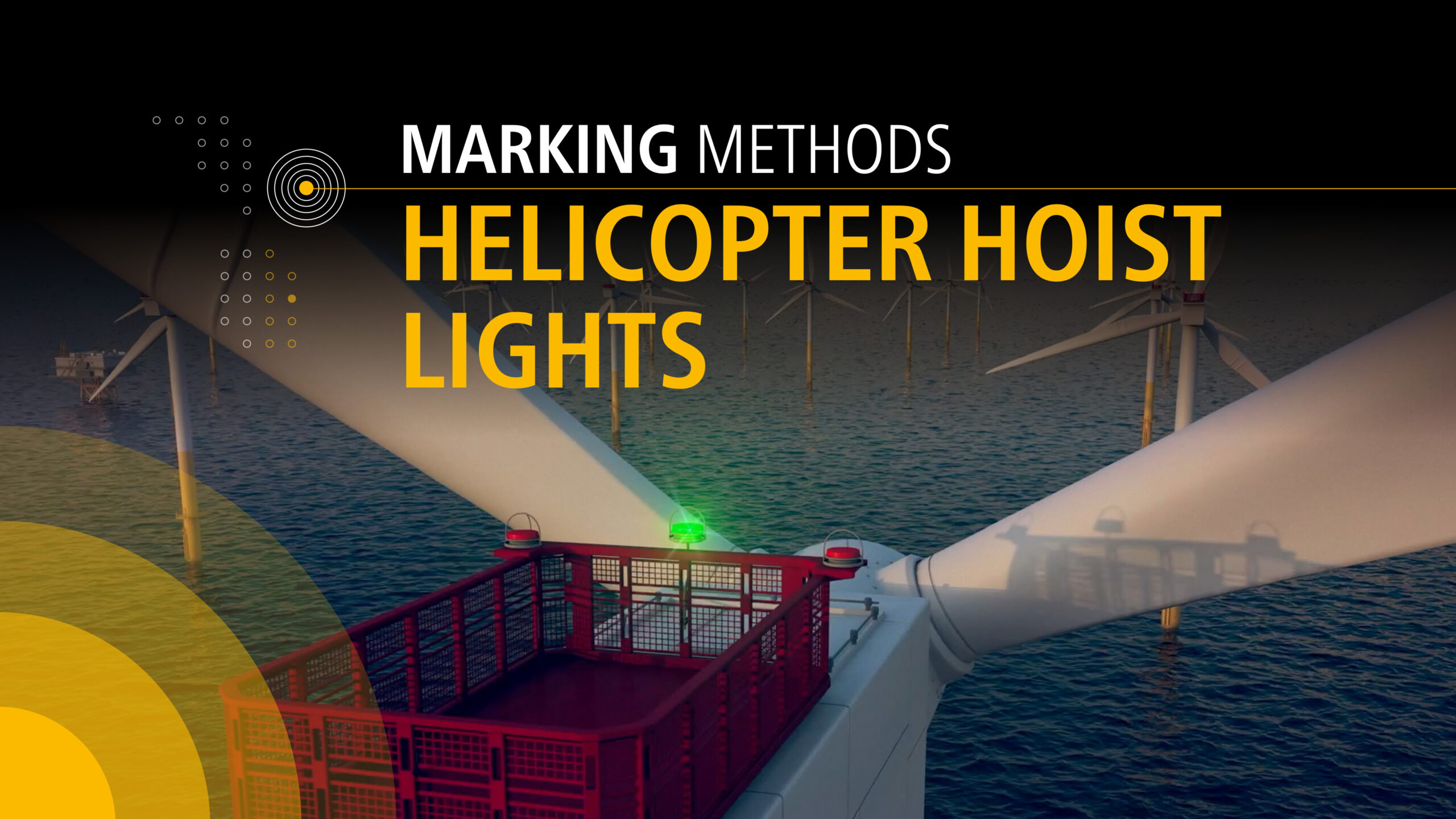
Helicopter Hoist Lights
In order for a helicopter to commence a safe hoisting operation on an offshore wind nacelle, the turbine blades must stop spinning. The control center will turn off and lock the rotor. When the blades are stopping a green light flashes. When the blades have stopped and been locked into position, the light stops flashing is steady green, indicating that the helicopter can safely approach the turbine and commence its operation.
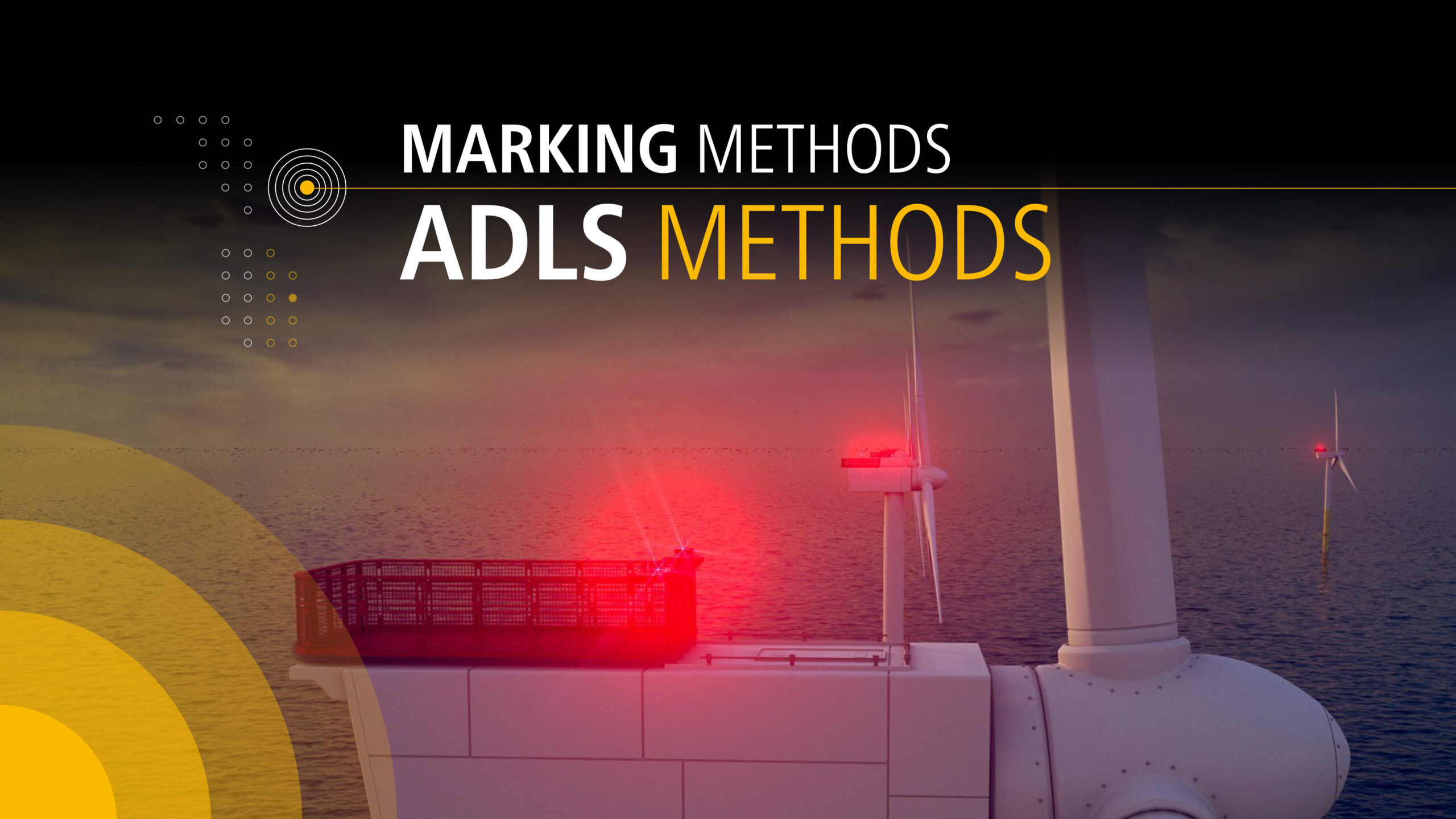
Aircraft Detection Lighting System
ADLS Methods
An Aircraft Detection Lighting System known as ADLS or BNK in Germany, is a system that keeps the red aviation lights off at night unless an aircraft is in the area. Normally aviation lights are designed to turn on when it is dark. An ADLS system will bypass this function though, and keep the lights off until necessary, like when an aircraft is in the area.windfarm, the medium intensity lights can be turned off and the search and rescue lights on.
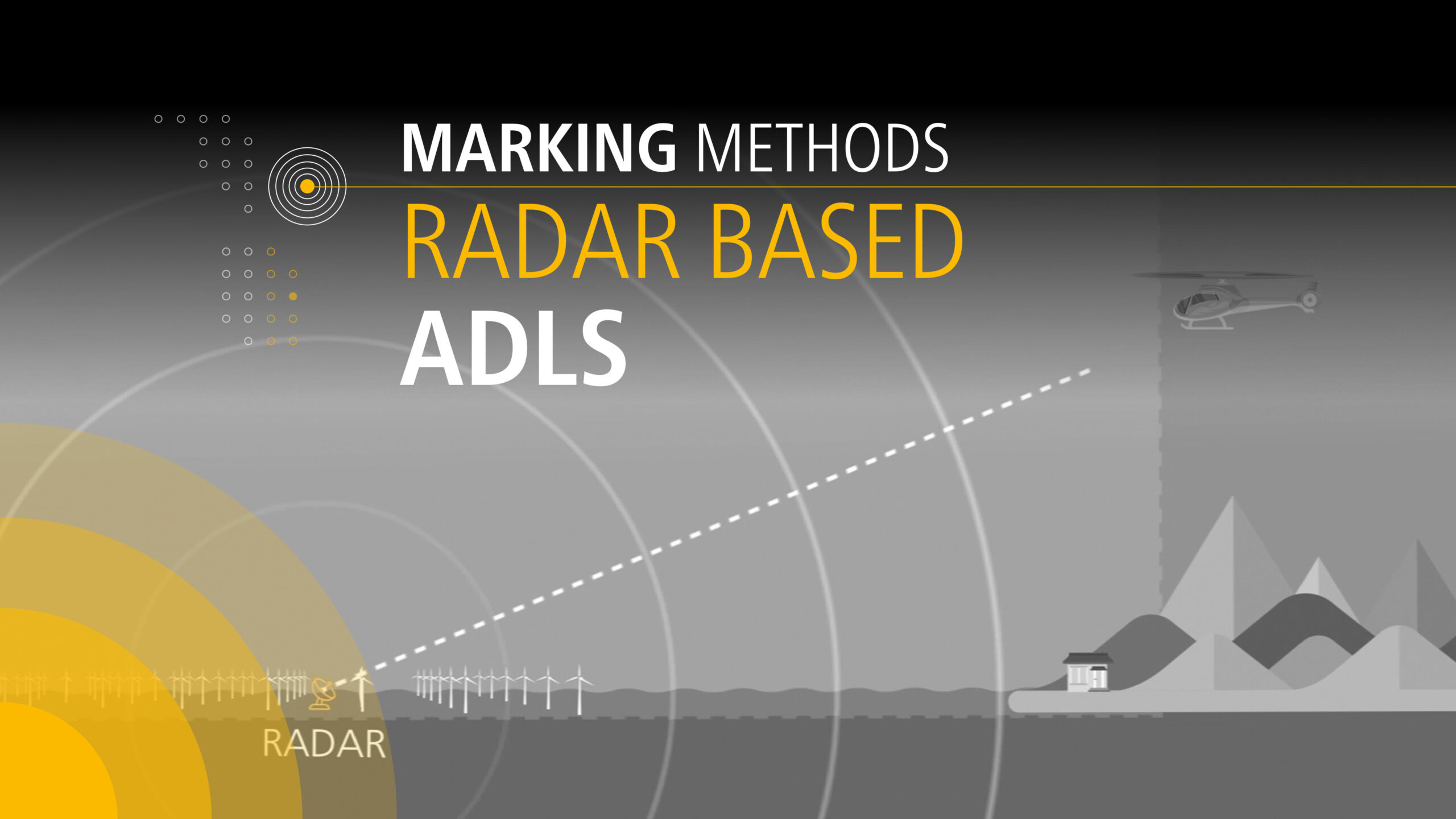
Aircraft Detection Lighting System
Radar based ADLS
A helicopter corridor is created by using high powered floodlights to illuminate two thirds of the turbine tower. These lights are installed on specific turbines to create and illuminate a path towards the helicopter landing pad which is typically located on the OSS.
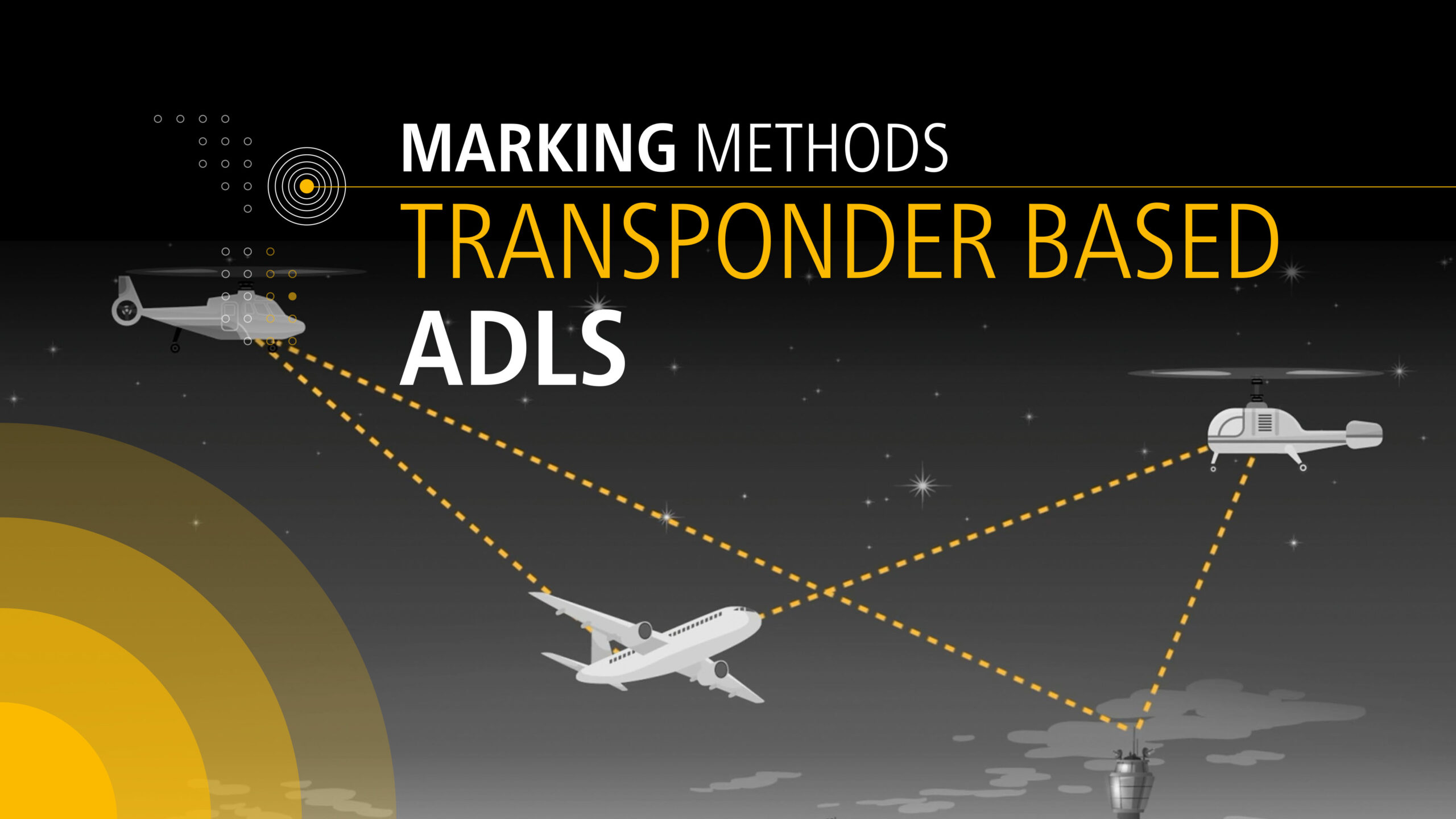
Aircraft Detection Lighting System
Transponder based ADLS
In order for a helicopter to commence a safe hoisting operation on an offshore wind nacelle, the turbine blades must stop spinning. The control center will turn off and lock the rotor. When the blades are stopping a green light flashes. When the blades have stopped and been locked into position, the light stops flashing is steady green, indicating that the helicopter can safely approach the turbine and commence its operation.

Work Light LA40
It is fit for purpose in an offshore environment, easy to install and low maintenance. An effective platform light not only has to endure a harsh environment but must provide a reliable light source, creating a safe working environment in any condition. The LA40 was designed specifically for illuminating offshore wind platforms and enduring the elements found there.
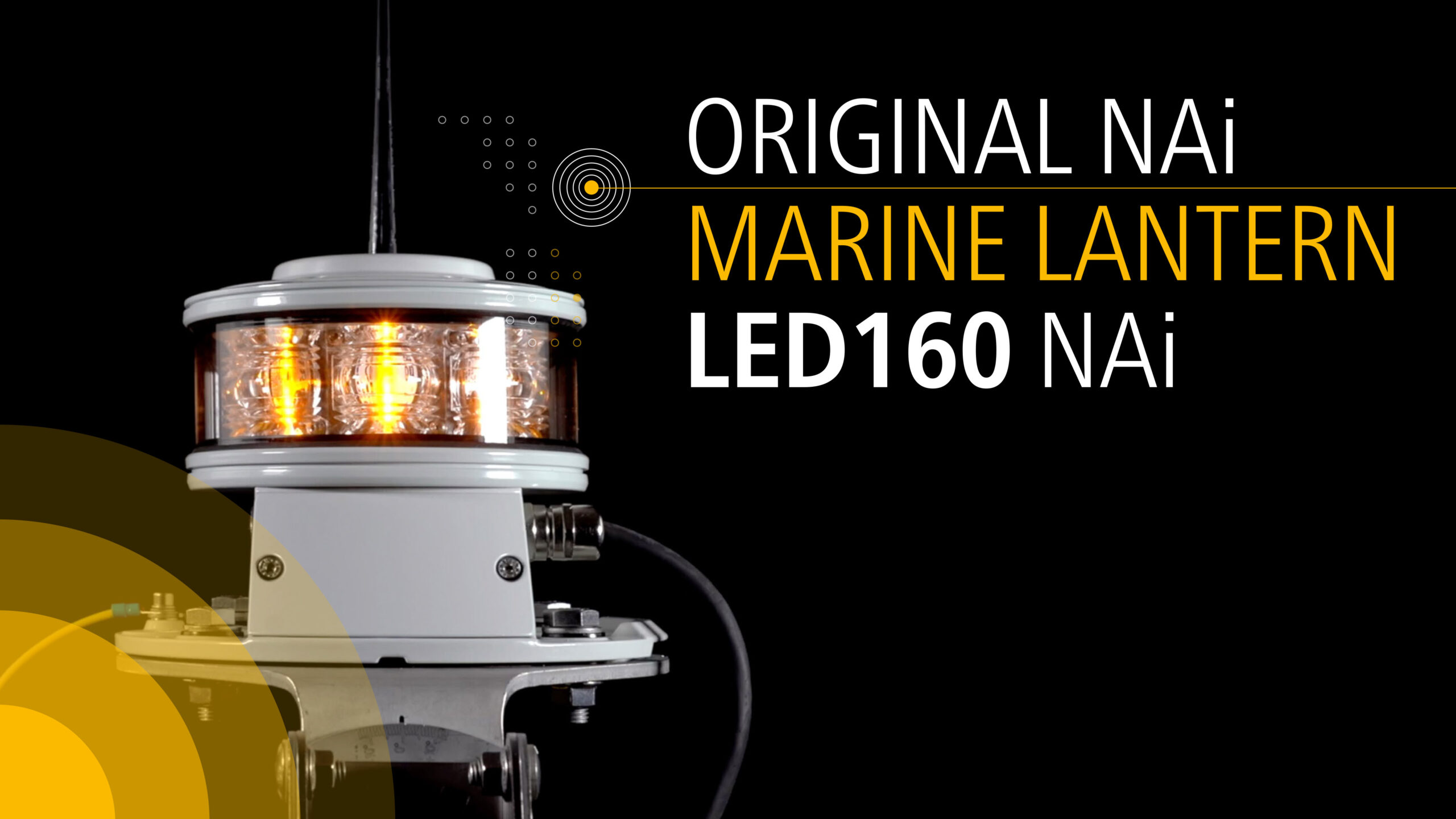
Marine Light ORIGNAL LED 160 NAi
The LED 160 NAi was designed for marking offshore wind turbines. This compact light comes standard in yellow with a configurable intensity to achieve a range from 2 to 5 NM and a higher intensity 10 NM white version. The LED160 NAi satisfies the IALA recommendation 0-139 guidelines for offshore structures and the German TF01 5NM beacon (yellow) requirements.
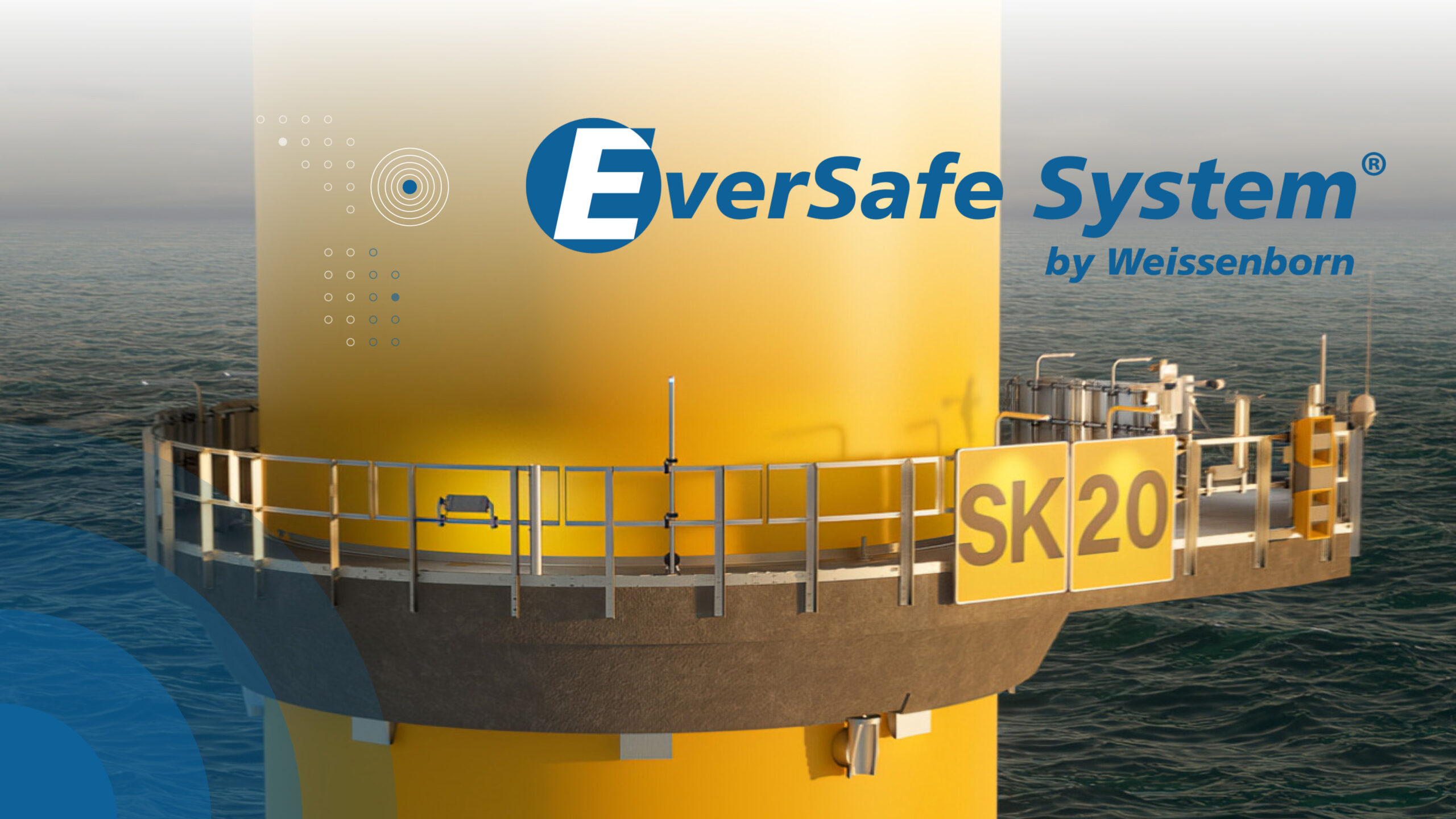
Railing System EverSafe
Railings are an important element in keeping offshore technicians on a platform safe. This is why Sabik Offshore A/S has developed the EverSafe System using a unique, safe and proven modular approach for assembling railings. Instead of welding the segments together, it uses rivets.The EverSafe Railing system is just the beginning of optimizing the transition piece experience.

Installation of
Original NAi Products

Understanding
NAi Controller

Railing Assembly
EverSafe
VIDEO CASE STUDIES
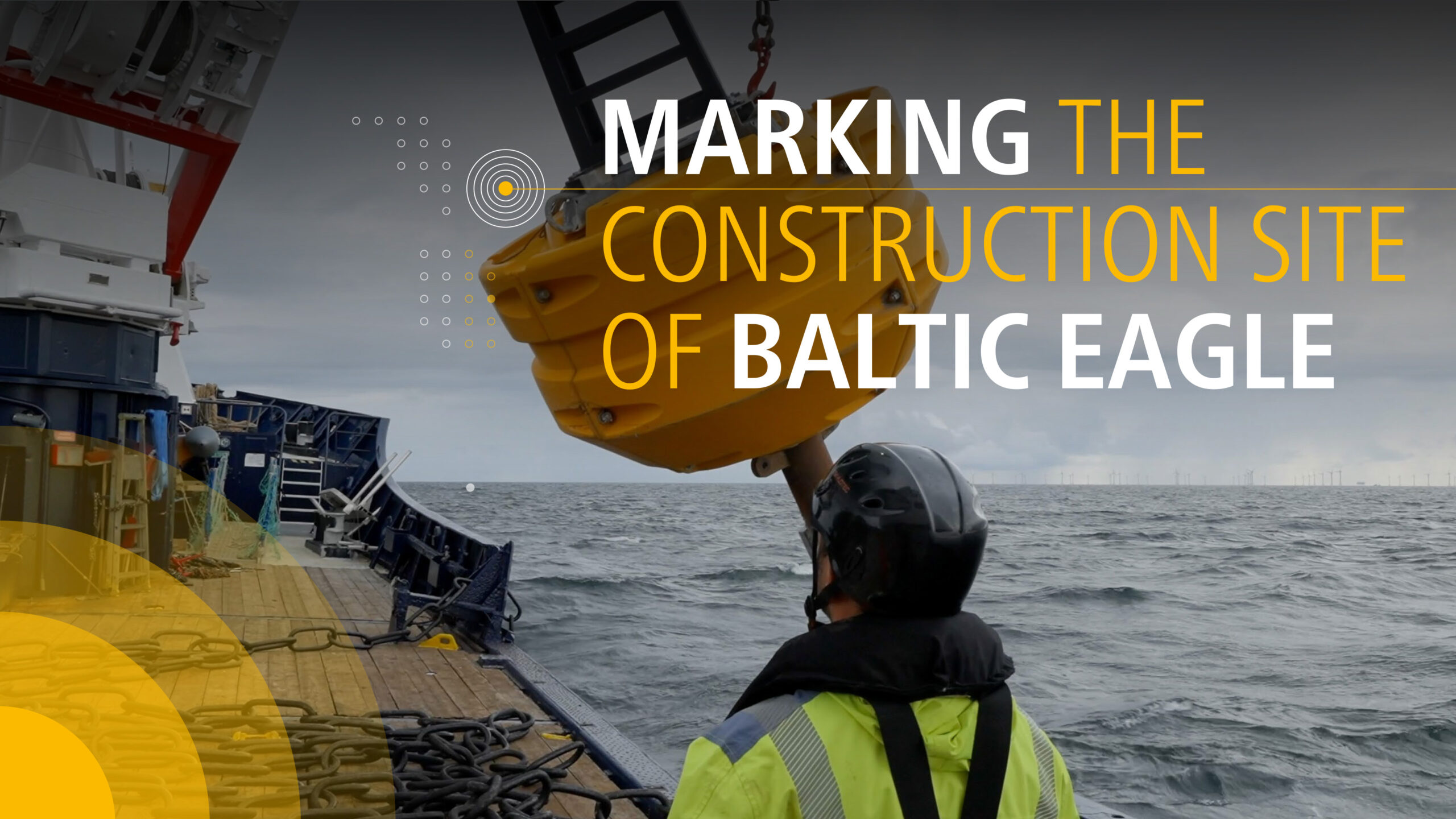
Towards the end of 2022, construction will start on the OSS for Iberdrola’s Baltic Eagle offshore wind farm. In order to ensure a safe working environment, Sabik Offshore was commissioned to mobilize cardinal buoys to mark the construction site.
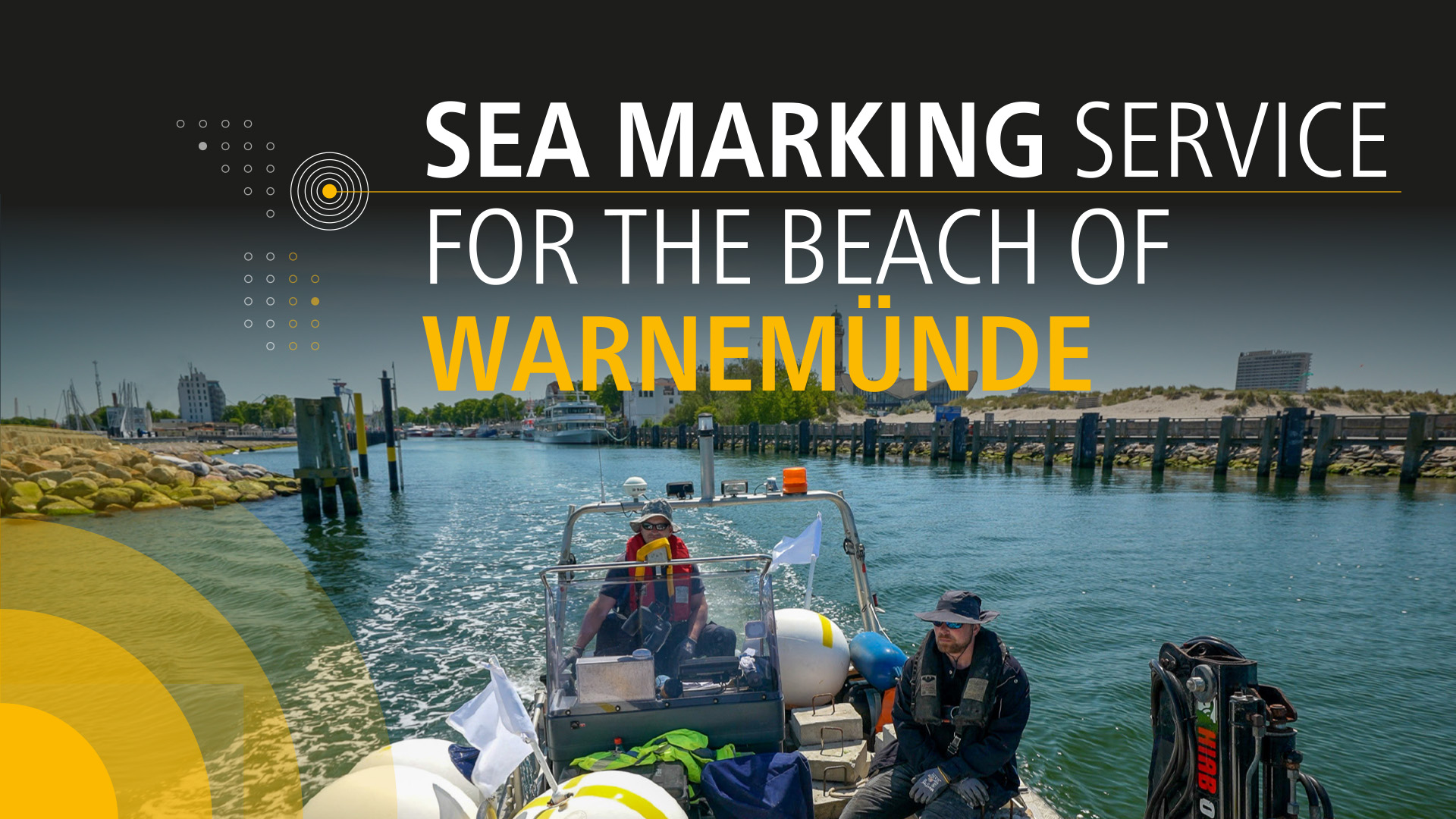
The sun is shining, the temperature is rising and the seaside resort of Warnemünde is getting ready for summer tourist season. Despite the chilly 13 degree water temperature, the beaches on either side of Warnow estuary are starting to fill up with bathers.
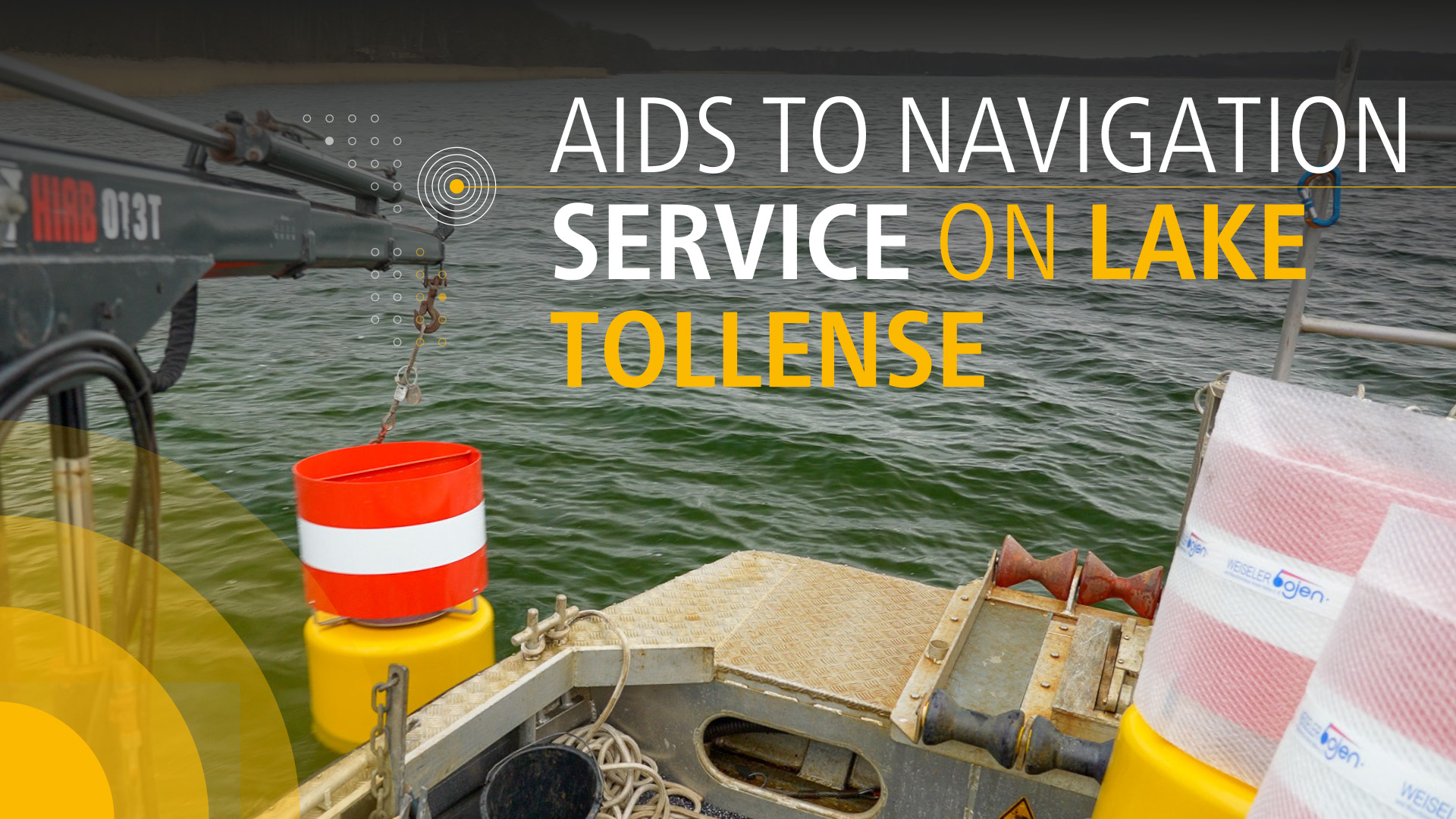
Lake Tollense is an important European bird sanctuary located near Neubrandenburg, Germany. Sabik Offshore’s sea marking team was asked to exchange 20 buoys that mark off a protected area on the lake.